Nagda Project

SWM intervention for Nagda Municipal Council

Nagda is a city in Ujjain district It is an industrial town in the Malwa region of western Madhya Pradesh and is situated on the bank of Chambal River. Nagda has retained its old world charm despite industrialization, with the old part of the city being full of narrow alleyways and crammed markets, while the new part of the city is better planned and is full of parks and gardens.Total Population : 1.36 Lacs Approx Solid Waste Management in Nagda Municipal Council:

Nagda Project

Solid Waste Management in Nagda Municipal Council:


The city of Nagda presently generates around approx 100 TPD (in 2017) of municipal solid waste (MSW) having an average generation rate of 600 gms/capita/day. The NMC Nagda Municipal Council is in charge of the waste management in its 36 wards. NMC collects around 25 TPD of MSW which accounts for almost 25 percent of collection efficiency. Until 2014, garbage was dumped at Mahidpur dumpsite.

Nagda Work

Mahidpur that was functional until 2015, garbage had been dumped to reach a height of over two metres, and this again has been capped and converted into a botanical garden and wetland. Nagda is no different from most other cities of India in its neglect of the garbage generated in the city. Heaps of garbage were poorly collected and carelessly transported from transfer stations in uncovered trucks to dumpsites, which could be described as land-hills. As the city expanded over the years, the dumpsites got closer and closer to town and became a major public health hazard.

First phase of the DTDC plan deals with those who generate the waste. Households, institutions, industries, markets, hospitals etc are the major waste generators. Among these categories, households are selected for the Door-To Door Collection Survey DTDC as the primary focus. Some of the areas which generate highest amount of waste under are Jawahar Marg, Station Road and M G Road.Study of recent improvements in the overall SWM scenario was undertaken: Sense of good hygiene and awareness towards environment are visible.
First phase of the DTDC plan deals with those who generate the waste. Households, institutions, industries, markets, hospitals etc are the major waste generators.
Improvement feedback includes request from shop keepers for Door to Door waste collection system being aligned with commercial timings and a little beyond (i.e to be made operative from 8 am to 10 pm) to facilitate commercial units improved participation.

We also reviewed process of household waste collection. The Household residents had earlier been provided with containers & dustbins to collect the household waste. Based on survey, Ward wise nuisance spots were and are being identified.

In our recommendations, initially, Door to Door collection system will be further improved via implementation of Pilot Project with inbuilt monitoring of prescribed norms.

The main objective of this system has to be improved implementation of the MSW rules-2006. The other objectives are related to create awareness towards overall conditions of health of the residents and hygiene of the city.

It also aims at improving the environment by timely collection of waste from every residence/shop on daily basis. Reduction in the number of placing big containers at certain spots will eventually help in less number of stray animals moving around.

Main learnings of Strategy used to achieve the Objectives:

Activities

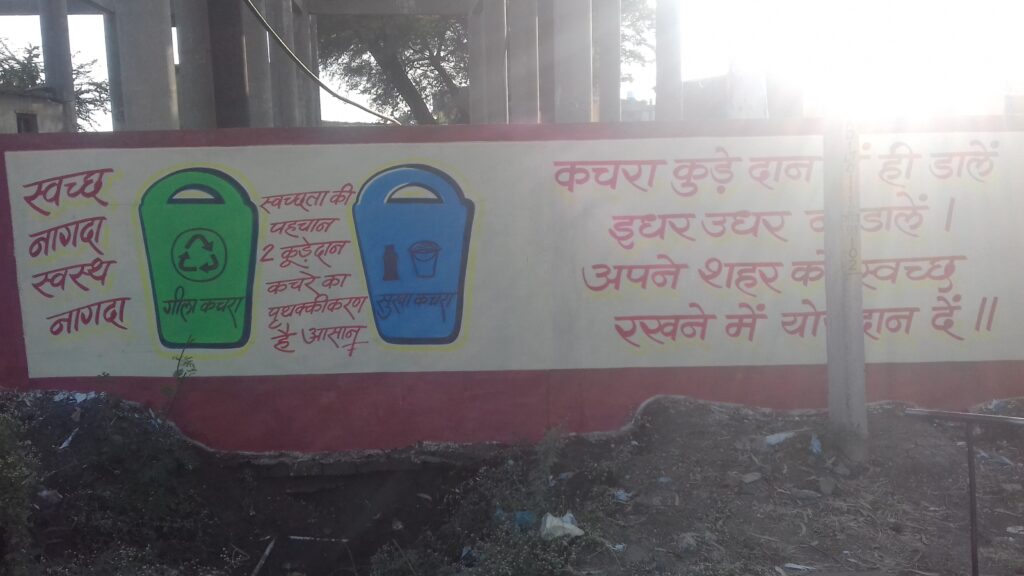
My City My Wall

MY CITY MY WALL

A painting competition initiative by Nagar Palika Parishad Nagda with the core of a two pronged approach

  1. Beautification of the city with mass involvement
  2. Implanting the seed of SBM in the mind of the masses by making them foresee how a united effort can bring about a drastic change in the city and make it look so clean and beautiful.

MY CITY MY WALL was artist special under this all the famous artists of Nagda were invited to give their contribution in beautifying the city.


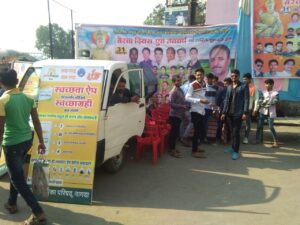
SWACHHATA RATH

Artist special under this all the famous artists of Nagda were invited to give their contribution in creating awareness the city . Around 7 musician took part in this and created a first of its kind in INDIA -a first drive through music in all 36 wards of Nagda. Created awareness and mass involvement in the mission through music and other activities in the local language.


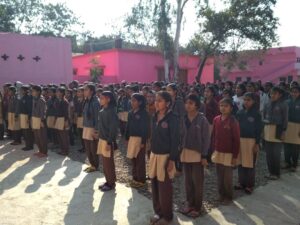
DOCTOR AAPKE WARD

Open defecation puts the health of women and girls at risk. It remains a major cause of child malnutrition, disease and death in many parts of the country. The primary challenge in reducing open defecation is that it is socially accepted in much of the region. There is also a shortage of capacity to implement community sanitation programmes that focus on changing behaviour. Changing the social behaviour is the biggest challenge we came across in our every drive/campaign against Open Defecation. It lead us to carry out a research for better understanding of slum dwellers’ behaviour. We found out that most of people, men or women are working on daily wages, and whenever they feel not well they go to the nearest clinic or hospital without wasting a minute, because they can not afford to not working, even for a day. In this case, Doctor is the person whom they trust the most. That’s how the idea of “Doctor Aapke Wardr” generated. We organised free health check up camps in all 36 wards including Govt Schools of Nagda Municipal council area during Doctor Aapke Dwar activity, where a team of Doctors advised them and told them about the community sanitation programme.